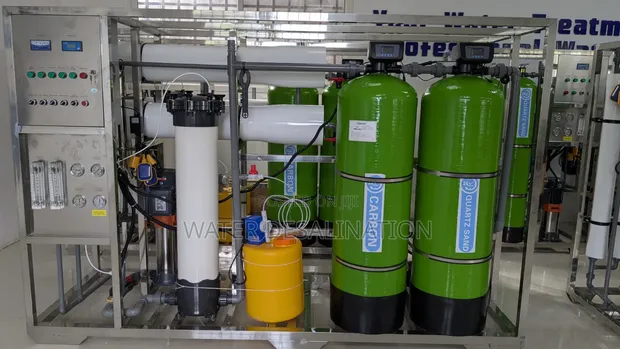
Automatic Industrial Reverse Osmosis 2000LPH
1 / 5
Price Analysis Above Market
Based on 597 similar listings
Market Demand
High Demand
Details
- Type
- Water Filters
- Brand
- Royalty
- Condition
- Brand New
Automatic Industrial Reverse Osmosis 2000LPH Highlights
- High-Volume Water Purification: Industrial reverse osmosis systems are designed for high-capacity water purification, ideal for commercial or large-scale applications. This unit can process up to 2000 liters per hour, ensuring a consistent supply of purified water.
- Advanced Filtration Technology: Reverse osmosis (RO) is a highly effective water purification method that uses a semi-permeable membrane to remove impurities. It filters out dissolved salts, minerals, bacteria, and other contaminants, producing very pure water.
- Durable Construction: Industrial RO systems are typically built with robust materials to withstand continuous operation and demanding environments. This ensures long-term reliability and performance in commercial settings.
- Versatile Applications: These systems are crucial for industries requiring high-purity water, such as food and beverage production, pharmaceuticals, laboratories, and manufacturing processes. They can also be used for large-scale water treatment or desalination.
- Energy Efficiency Considerations: While RO systems require energy for pumping, modern industrial units are often designed with efficiency in mind to minimize operational costs. Factors like pump efficiency and membrane performance contribute to overall energy usage.
Description
• Industrial Reverse Osmosis (RO) plant with a capacity of 2000 liters per hour. • Utilizes a specialized membrane to remove up to 99% of impurities, including salts, bacteria, and chemicals. • Improves water taste and odor, providing safe drinking water for industrial use. • Reduces reliance on bottled water, offering a cost-effective solution. • Requires regular filter replacement and membrane cleaning/replacement for optimal performance. • System monitoring is essential to ensure consistent water quality and efficiency.